Process Mining: How to always make the best decision

Get the most out of your processes – based on facts.

A man in a business setting sits in front of his laptop and thinks about something.

The true state of your processes usually remains invisible. Discover now how process mining closesthis gap!
Achieve maximum efficiency and secure your ROI by eliminating bottlenecks, rework, and hidden costs based on facts.
Transparency is the key to success.

At a glance

  • Process mining provides an objective model of your processes based on IT data.
  • The analysis is carried out in three steps: discovery, compliance, and enhancement.
  • Process.Science offers a state-of-the-art integration solution for your BI infrastructure   cost-effectiveness (TCO).
  • Save costs: Stop maverick buying, rework, and cash discount losses in alldepartments.
  • Secure and improve your ROI by making fact-based and smart decisions in your companyat all times.

Read this article to find out how it works.

Table of contents

  1. Process mining: Definition and differentiation
    1. The scientific basis and development
    2. Process mining in context: Differentiation from data mining and BPM
  2. The methodology: How process mining works with event logs
    1. The 3 analytical phases
  3. Process mining tools: BI integration as the key
    1. Process Mining and Microsoft Power BI
    2. Process Mining and Qlik Sense
  4. Process mining: The business case for your investment
    1. Maximum savings potential across all departments
  5. Process mining consulting: Why Process.Science is the best choice
    1. The Process.Science promise: Sustainable economic advantage

Process Mining: Definition and Differentiation

A digital representation of a process hovers above a tablet next to a laptop, with hands working on a keyboard.

Imagine if you could take a digital X-ray view of your entire business processes—every single step, every bottleneck, and every deviation—and uncover them in a transparent and fact-based way. That's exactly what process mining enables.

What is process mining?

Process mining is adata-driven analytical method that uses event logs from IT systems toobjectively reconstruct the actual model of business processes. It closes thegap between theoretical process management and the processes actually used inpractice and provides an objective, quantifiable database for calculating thereturn on investment (ROI).

Process mining is a strategic tool that provides process owners with an objective data basis for realizing massive efficiency gains and thus securing a sustainable return on investment (ROI).

Let us advise you: At Process.Science, we are specialists in data-driven process analysis, optimization, and implementation

The scientific basis and development

The origins of process mining date back to the late 1990s and are closely linked to the name Wil van der Aalst (Dutch computer scientist), who recognized the immensepotential in digital traces. Process mining has developed into an independent field of research at the interface between information systems and data science. The IEEE Task Force on Process Mining plays a central role in standardizing methods and promoting research.

Process mining in context: differentiation from data mining and BPM

Clarity about positioning is crucial. Process mining bridges the gap between theoretical models and the data world:

DisciplineFocus and objectivesRelationship to process mining
Process miningReconstruction of the actual model based on event logs to identify inefficiencies.This is the central analytical method that takes data from the systems and forms the basis for all further decisions.
Business Process Management (BPM)Modeling and control of processes. Creates the target model (how processes should ideally run).Process mining provides the objective facts (the actual model) that serve as a sound basis for strategic BPM decisions.
Data miningPattern recognition in large, arbitrary data sets. Focuses on correlations and general predictions.Process mining is a specialized form of data mining that focuses exclusively on the analysis of process-related event logs in order to focus on the sequence and time component.

The methodology: How process mining works with event logs

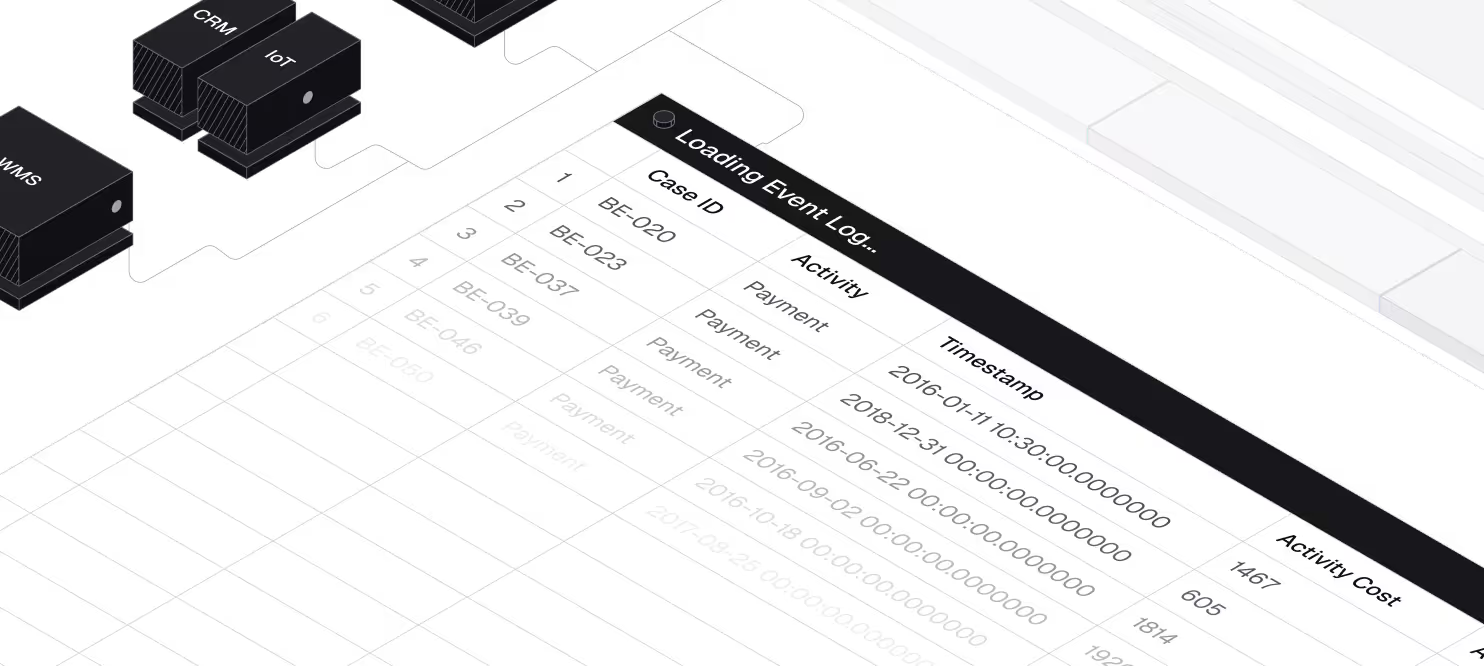
Illustration of an example event log, in which the information is arranged in rows one below the other.

The entire methodology of process mining software is based on so-called event logs.

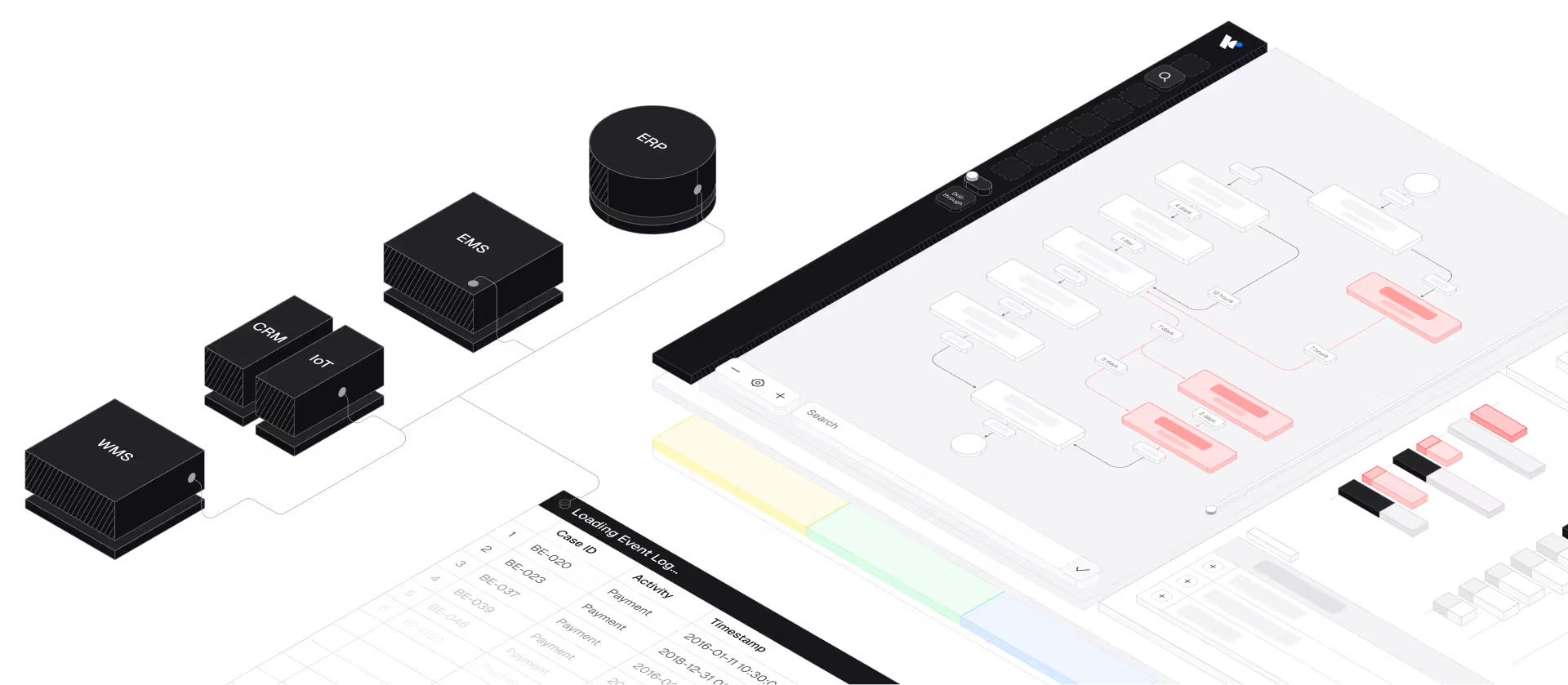
A log is the digital fingerprint of a process that is extracted from IT systems(e.g., ERP, CRM) and must contain at least three pieces of information: case number (case ID), activity, and timestamp.

The 3 analytical phases

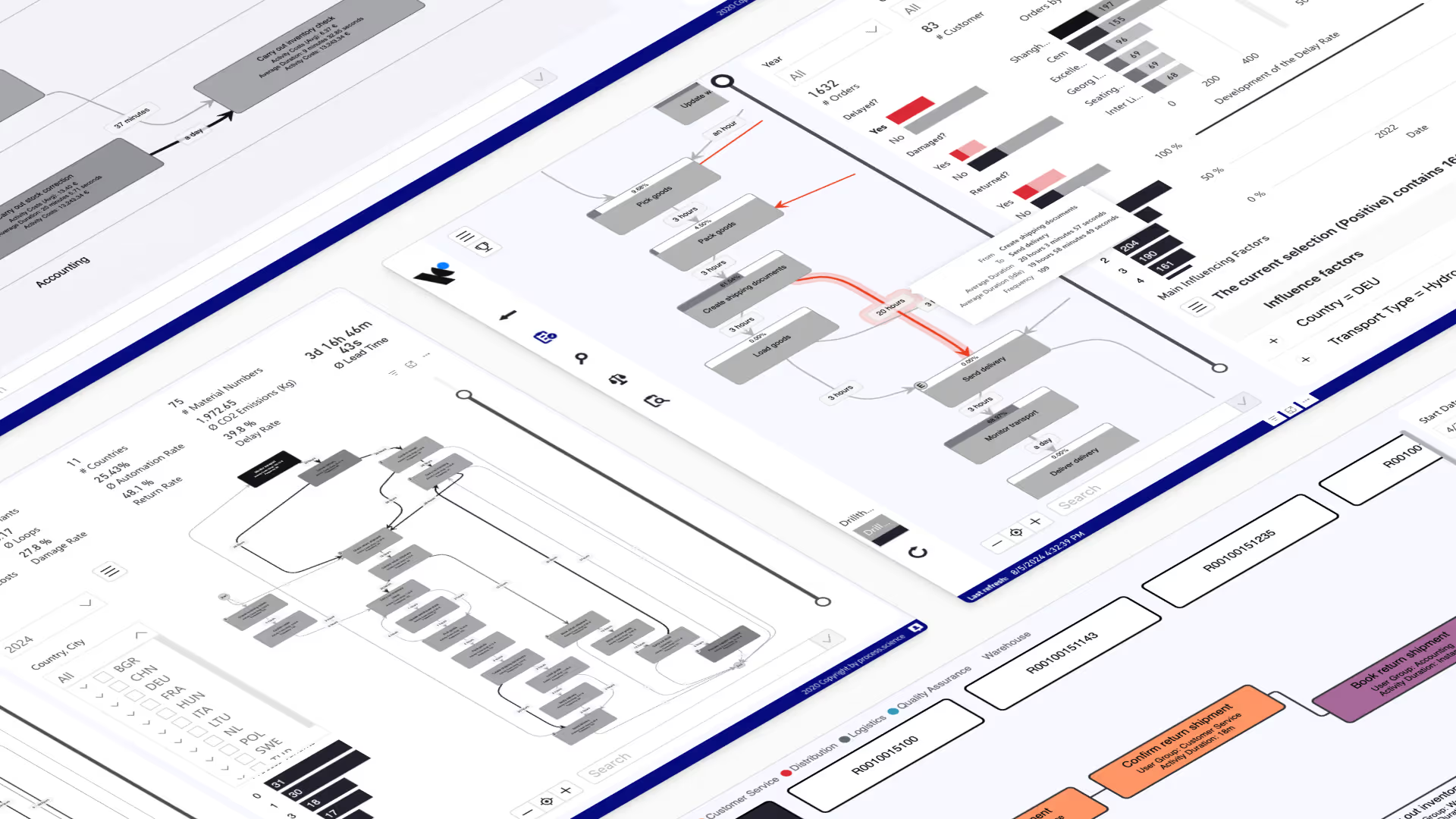
Process mining software uses algorithms to link these individual events chronologically via the case number. The analysis is divided into three in-depth, sequential phases:

  1. Process discovery: The software generates a visual actual model (the process graph) from the event logs, which objectively displays all real paths, bottlenecks, and deviations. This reveals the unexpected complexity of the actual process.
  2. Conformance Checking: The actual model is compared with the target specifications. The process mining software quantifies rule violations and compliance risks (e.g., failure to meet deadlines).
  3. Ehancement: The software identifies the root causes of bottlenecks and weak points. The findings are used to reduce throughput times and costs, thereby deriving well-founded recommendations for action for process management.

Process mining tools: BI integration as the key

For decision-makers, the choice of process mining software and its integration into the existing IT landscape is crucial for cost-effectiveness. The trend is clearly toward the use of existing business intelligence (BI) environments.

Process Mining and Microsoft Power BI

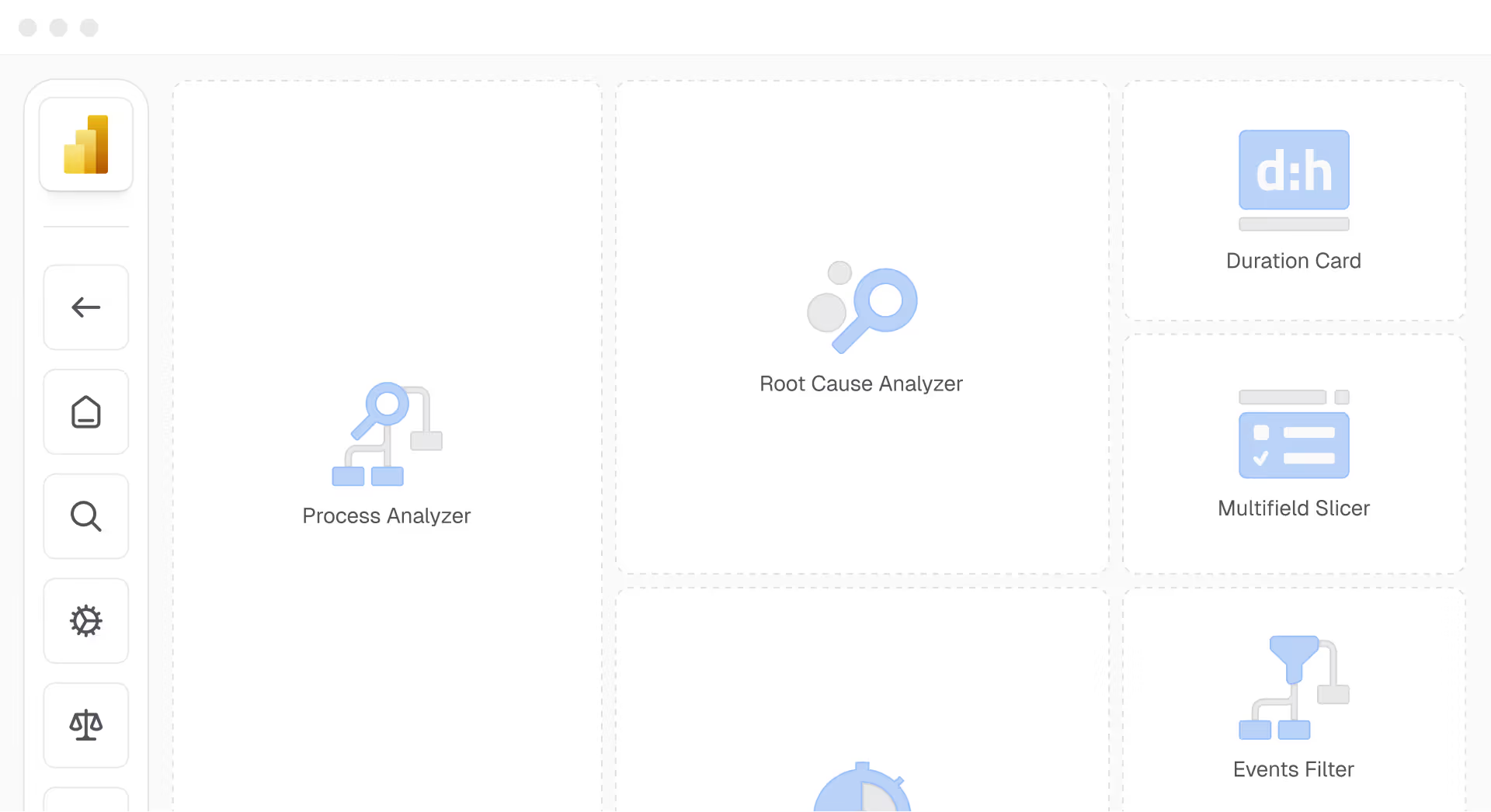
With Power BI Process Mining, the process mining logic is integrated directly into Power BI. This allows users to seamlessly link the process graphs to their existing BI dashboards and KPIs. The result is a highly flexible solution that combines the process transparency and reporting power of Power BI.

Process Mining and Qlik Sense

The situation is similar with integration into the Qlik Sense environment. Process mining solutions for Qlik Sense use Qlik's in-memory capabilities to analyze processes quickly. Process mining for Qlik Sense offers a highly efficient, exploratory analysis option that makes optimal use of the existing Qlik Sense infrastructure.

Process mining: The business case for your investment

A man in a suit is holding a tray and looking at the camera, while a desk, shelf and business board can be seen in the background.

For you as a decision-maker, the direct return on investment (ROI) of the software purchase is what counts most.

Investing in process mining is a strategic tool that achieves massive efficiency gains across the entire organization by revealing hidden costs.

Maximum savings potential across all departments

Process areaDirect benefits & savings potential
Purchasing (P2P)Utilization of discounts through accelerated invoice verification. Avoidance of maverick buying (uncontrolled purchasing) and reduction of manual rework.
Sales (O2C)Accelerated order throughput times (faster invoicing). Reduction of errors that later require costly corrections.
Finance & ComplianceAutomatic identification of compliance violations and unauthorized postings in information systems. Reduction of audit effort.
IT ServiceShortening of ticket processing times (MTTR). Optimization of resource utilization in support, based on analysis of event logs.
Strategic BPMProcess mining software provides objective data to successfully manage business process management (BPM) initiatives in a measurable and fact-based manner.

The advantage for your company: The investment in process mining more than pays for itself through the sum of the savings in each individual business process. Process mining provides you with the data basis to quantify these savings and secure them on an ongoing basis.

Process mining consulting: Why Process.Science is the best choice

As a decision-maker, you need to ensure that the process mining software you choose is not only powerful, but also economically superior and future-proof. With its unique, state-of-the-art BI integration, the Process.Science solution offers a clear competitive advantage over expensive, proprietary isolated solutions.

The Process.Science promise: Sustainable economic advantage

  1. Lowest total cost of ownership (TCO): We use your existing BI infrastructure. This saves you significant investment costs in new licenses, databases, and ETL tools from competitors. You protect your existing investments.
  2. Fastest ROI: Thanks to the familiar BI environment, you can get started with process mining faster and see initial results within days—not months.
  3. Maximum acceptance: Your employees work with familiar tools (Power BI/Qlik Sense), which guarantees the utilization rate of process mining analyses throughout the company.

Your return on investment booster: The Process.Science solution not only delivers the most comprehensive process transparency, but also maximizes your ROI by leveraging existing investments instead of forcing new ones.

Process.Science provides you with not only process mining, but also a superior overall strategy. We help you quantify the savings potential for your company and prove why our BI-integrated solution is the best choice for maximum process efficiency and minimum risk.

Start a dialogue with us now and let us guide you through a demo version. We will show you the process mining solution that protects your investments and revolutionizes your processes.

Make an appointment for a personalized process mining consultation — free of charge and with no obligation.

Would you like to learn more about the possible applications in companies?

Or discover specific use cases by industry?

Read our success stories and references.

About Us:

Process.Science is an independent consulting firm specializing in process mining, data-based process analysis, and digital transformation.

  • We analyze and visualize business processes based on data (process mining).
  • Identify bottlenecks, inefficiencies, and optimization potential
  • Support companies in the introduction of process mining technologies and data projects
  • We provide support for sustainable process optimization and digital change projects
  • Provide workshops, analyses, implementation consulting, and implementation support

Process.Science is a specialist in data-driven process analysis, optimization, and implementation.

Quick Answers to

Frequently Asked Questions

What is process mining and how does it differ from data mining?

Process mining analyzes event logs from IT systems to create an objective model of your processes as they currently exist. It combines data science with process management (BPM) and is more focused than general data mining.

What specific ROI does process mining deliver?

It reduces costs by avoiding maverick buying and rework. By uncovering bottlenecks, it secures cash discounts and accelerates invoicing (order-to-cash).

What are the three steps involved in a process analysis?

The analysis consists of: discovery (visualizing the model), conformance checking (checking for rule violations), and enhancement (identifying potential for process improvement).

Why is Process.Science's BI integration superior?

It lowers the TCO because it uses your existing BI licenses (Power BI/Qlik Sense). This saves new infrastructure costs and guarantees rapid acceptance by the team.

What data is required for process mining?

The software requires event logs from your IT systems. Each event must contain at least the case ID, the activity, and the exact timestamp.
Start Now

Schedule an Appointment

Start analyzing and optimizing your processes today.
Please contact us for an individual offer.
Contact